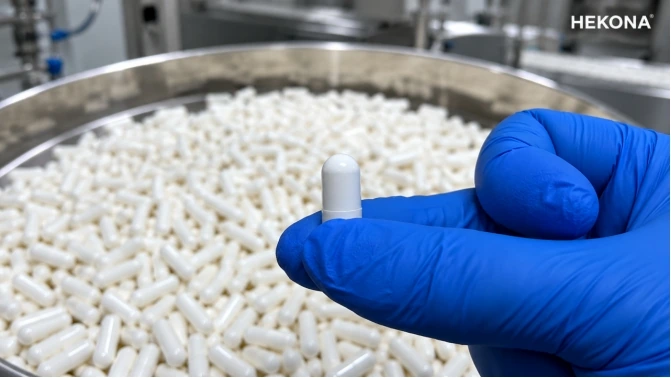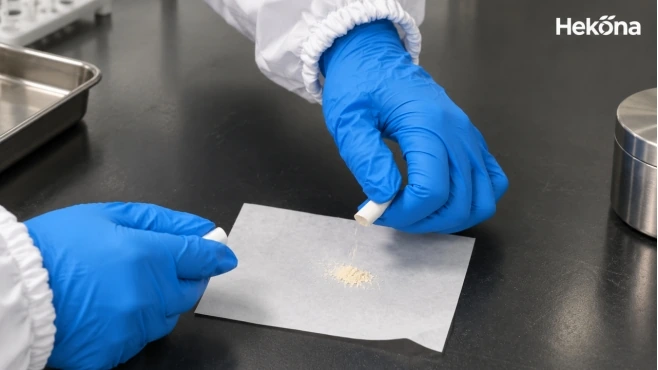

When a buyer sends us a botanical capsule formula, it often looks something like this:
Ashwagandha — 500 mg
Milk Thistle — 500 mg
Turmeric — 500 mg
A useful conversation can start from that list; raw-material approval cannot.
The 500 mg figure settles weight while saying nothing about the grade being weighed.
Is it root powder?
An extract?
For an extract, the missing piece is its specification.
The brief also has to say whether withanolides are controlled.
Carrier status is another blank that the supplier has to close.
Repeat the exercise for milk thistle, turmeric and saw palmetto; each plant line can conceal a different grade.
A missing detail rarely stays in purchasing. It returns in the quote, shell calculation, test request or artwork.
Price comes later. First, purchasing needs an orderable material:
Which supplier grade will actually enter the capsule?
Let the Product Brief Choose the Material Form
Powder, non-standardized extract and standardized extract answer different briefs rather than ranking neatly by quality.
Once the form is chosen, the formulation constraints become easier to see.
| Product Direction | Material Worth Reviewing First | Main Points to Check |
| Whole-herb or traditional botanical positioning | Botanical powder | Larger serving mass, natural variation, capsule volume |
| Lower powder load or more concentrated formula | Extract | Extract ratio, process, carrier, actual commercial composition |
| Defined marker level and tighter ingredient specification | Standardized extract | Marker level, test method, carrier, consistency and label wording |
A premium brief does not automatically call for the extract with the largest marker number.
The brief has to carry the decision: intended serving, evidence, room in the shell, material cost and sales market.
Purchasing Needs More Than the Plant Name
The word turmeric can occupy one line on a quote while covering several possible grades.
The material line may contain nothing more than:
Turmeric
could refer to very different commercial materials.
It might be milled turmeric plant material.
For the second supplier, it could mean a concentrated extract.
For the third, it could mean an extract controlled to a stated curcuminoid level.
All three descriptions use the correct plant name, yet purchasing would receive three unlike materials.
The name may be correct in every case, but the materials remain different purchases.
Purchasing therefore starts with identity and plant part, not the marketing name.
Root is not leaf, and seed, fruit, bark, aerial parts or whole plant do not collapse into one grade merely because the species matches.
For an extract, more questions follow.
What extraction system was used?
How is the extract ratio defined?
The file must also identify any carrier in the supplied powder.
What marker compounds are tested?
What method produced the reported result?
For purchasing, plant identity, plant part, material form, extraction details and test method all outrank the marketing name.
Botanical Powder Is Not the “Lower Grade” Option

The word “extract” often sounds more technical, so brands sometimes assume that an extract must be better than botanical powder.
That is too simple.
A powder starts with the selected plant part and proceeds through cleaning, drying and milling, without extraction.
That route retains more plant matrix and may suit a brief based on whole-herb or traditional positioning.
Its compromise appears inside the shell: volume.
Low density and fibrous texture are where the capsule problem begins: the material takes up room.
The balance reads 500 mg for both materials, while the filling machine sees two different volumes.
Some powders also flow poorly.
When the grade is very fine, dust and static can enter the handling discussion.
A moisture-sensitive grade can arrive free flowing and later cake in storage or at the filler.
For capsule work, we usually care about practical questions such as:
- What volume does the intended dose occupy?
- Does it flow through the filling process properly?
- The review should note how the powder responds to humidity during ordinary processing.
- Does the target weight fit the intended capsule?
- Has the formula left room for any formulation aid the grade may need?
Whatever appears on the front label, the filling line has to cope with the grade’s real behavior.
Read the Extract Ratio Before Comparing Grades
The case for an extract is strongest when its lower material load solves a capsule-space problem.
In a crowded capsule, that difference is practical rather than theoretical.
Ratio figures, however, are easy to overread.
The quotation might list:
10:1
20:1
50:1
Fifty to one looks stronger than ten to one on a price sheet, but the visual comparison is doing more work than the evidence.
The ratio cannot support that conclusion by itself.
A 10:1 Extract Does Not Mean “10 Times the Effect”
The supplier uses the ratio to describe how starting botanical material relates to its extract under that process.
Ten to one is not a promise that every original compound rose by a factor of ten.
Nor is it evidence for ten times the effect in the finished supplement.
One line in the specification is frequently overlooked:
Does the ratio refer to the native extract or the final commercial extract powder?
The commercial dried powder may include a carrier used during processing or to support drying, flow or stability.
When the supplier cannot explain the basis of “10:1,” purchasing still has an unfinished specification.
Record the ratio, then return to the specification and formula before choosing the supplier.
What Standardization Actually Tells You
With standardization, the specification gains a marker that quality can measure against a stated range.
The practical difference appears in these two lines:
Ashwagandha root extract standardized to 10% withanolides
gives purchasing and quality a usable control that is absent from:
Ashwagandha extract
alone.
The percentage still comes with several footnotes.
Which compounds did the calculation count?
The method behind the number must be named.
The reporting basis matters too: as received and moisture corrected are not the same figure.
The file must also identify any carrier in the supplied powder.
What range will quality accept?
Standardization makes the purchased grade easier to define.
A larger percentage can tighten the grade definition without making the finished capsule inherently better.
Nor can every effect linked with the plant be assigned to the marker simply because that marker is measured.
That boundary is easy to lose when technical specifications are turned into label claims.
A Real Formula Shows Why the Specification Matters
A formula line makes the distinction harder to overlook.
Consider milk thistle in two 600 mg entries.
A formula using:
Milk Thistle Extract — 600 mg, standardized to 45% silymarin
is not the same product as:
Milk Thistle Powder — 600 mg.
Their weights match at 600 mg; their specifications do not.
The commercial ingredient is not.
The same applies to an ashwagandha formula using:
Ashwagandha Root Extract — 300 mg, standardized to 10% withanolides.
Neither 300 mg nor 500 mg of ordinary powder becomes equivalent to that extract merely because the units match.
The formulation record therefore needs the inconvenient but complete description:
plant + plant part + material form + commercial amount + standardized marker where applicable.
Only that full line gives R&D, purchasing and quality a common material to discuss.
The Commercial Grade Can Change the Capsule
Ingredient specification does not only affect the technical file.
The selected grade can alter the capsule people eventually hold.
Consider a brief that fixes the serving at two capsules.
The milligram total may leave comfortable room in the first calculation.
Then the actual botanical materials arrive.
One powder is light and bulky.
Another extract is dense.
The third takes up moisture and moves reluctantly through the filling equipment.
Now the capsule calculation changes.
This is why we do not choose a capsule size from total milligrams alone.
Capsules hold volume.
Shell selection now depends on bulk density, flow, particle size and the space reserved for excipients.
The formulation team may need to:
- use a larger capsule;
- increase capsules per serving;
- choose a more concentrated botanical material;
- adjust the formula.
Capsule fit is only half of the production check; the blend must also stay uniform.
A concentrated ingredient used at a low dose still has to be dispersed throughout the batch.
When particles or densities differ sharply, handling and filling can encourage the blend to separate.
So the question is not simply:
“Can 500 mg fit?”
It is:
Can the actual commercial blend be mixed and filled consistently in the planned capsule format?
Match the Sample to the Grade You Will Order
This sounds obvious, but it causes real problems.
The first material on the bench may be a free supplier sample.
R&D checks how that sample looks, flows and fills.
It flows well, fills well and gives the expected appearance.
The commercial order later arrives with a different carrier system, different particle size or a different processing grade.
The early capsule work may no longer tell you much.
A development sample is most useful when it represents the commercial grade that will actually be purchased.
If the sample and the production material are different, those differences should be known before the formula is approved.
They can affect:
- capsule fill;
- flow;
- color;
- odor;
- moisture sensitivity;
- mixing behavior;
- test results.
For botanical capsule projects, “same plant” does not automatically mean “same manufacturing behavior.”
What Should a Brand Request From the Raw-Material Supplier?
A quotation saying:
Turmeric Extract 95%
still leaves too many blanks for commercial approval.
Before the material goes into a finished formula, the technical file should normally make clear:
- botanical identity;
- plant part;
- material type;
- extraction information where applicable;
- extract ratio and how it is calculated;
- carrier or processing aids;
- marker compounds and limits;
- test methods;
- identity method;
- relevant microbial limits;
- heavy-metal limits;
- pesticide limits where applicable;
- residual solvent limits where applicable;
- storage conditions;
- retest date or shelf life;
- the allergen, GMO, irradiation or other declarations required for this ingredient and market.
A current specification and representative Certificate of Analysis can define the grade; a sales sheet cannot.
Document sets vary by ingredient and market, yet they must lead purchasing, R&D and quality to the same commercial material.
If Two Labs Give Different Results, Check the Method First
Botanical marker results do not always match perfectly between laboratories.
That does not automatically mean one result is wrong.
The laboratories may be using different methods.
One result may be reported on an “as is” basis.
Another may be corrected for moisture.
Sample preparation may differ.
The reference standard may differ.
Spectrophotometry may report a broad value, while chromatography separates compounds; the two results are not automatically comparable.
Before treating a difference as a raw-material failure, check:
- method reference;
- sample preparation;
- reference standard;
- calculation basis;
- moisture correction;
- units;
- acceptance range.
HEKONA has internal laboratory capabilities for selected routine testing. Testing outside the internal laboratory is arranged when the ingredient, method or project calls for it.
No single analytical method is suitable for every botanical and every marker.
It is that the approved specification and the release decision should be based on a method that is suitable for the material and understood by both supplier and manufacturer.
Update the Label When the Material Changes
Artwork often becomes the forgotten file when purchasing changes a grade.
R&D may approve:
Ashwagandha root extract standardized to 10% withanolides.
The purchasing team later selects another ashwagandha grade.
Without an artwork review, the label can continue describing the grade that was replaced.
Botanical name, plant part, extract status, serving amount and marker statement must all trace back to the approved grade.
If the grade contains a carrier, include it in the destination-market regulatory and labeling review.
The label should not be written from a marketing description while purchasing works from a different technical specification.
That is exactly how preventable artwork problems start.
Ingredient Specification Also Changes Cost and MOQ
Botanical selection is also a commercial decision.
A standardized extract may cost considerably more per kilogram than a basic botanical powder.
That does not automatically mean the finished product will cost more in the same proportion.
A more concentrated material may reduce the amount needed per serving.
It may also reduce the capsule count.
On the other hand, a specialized extract may have a supplier minimum that is much larger than the quantity needed for the first production run.
That can become the real MOQ constraint for a fully custom project.
So instead of comparing only:
price per kilogram,
the useful comparison is:
For the chosen specification, compare cost per serving, capsule count, minimum purchase and the stock likely to remain.
That worksheet is closer to the brand’s real cost than kilogram price alone.
How HEKONA Reviews a Botanical Capsule Project
HEKONA is a dietary supplement manufacturer, not a botanical extraction plant.
We source and review botanical materials as part of finished supplement development and production.
When a brand sends us a botanical capsule formula, we normally look at more than the plant name and milligrams.
We review:
- botanical identity and plant part;
- powder, extract or standardized extract form;
- marker specification where relevant;
- actual commercial ingredient amount;
- bulk density and flow;
- moisture sensitivity;
- intended capsule size and capsules per serving;
- supplier specification and testing documents;
- target-market requirements.
For one brief, ordinary powder may fit without compromise.
For another, concentration may be what keeps the serving practical.
A third project may need the tighter raw-material definition that standardization provides.
At HEKONA, the largest ratio or marker number does not win on sight.
The chosen grade must still survive four tests: formula, shell, quality plan and budget.
Close These Checks Before Comparing Final Quotes
Final prices become meaningful only when every supplier is quoting the same defined material.
Has the botanical identity and plant part been fixed?
Has purchasing confirmed powder versus extract?
For an extract, can the supplier explain its ratio basis?
Is a marker standardized?
The method behind the number must be named.
Does the commercial material contain a carrier?
What quantity of the supplied commercial grade enters each serving?
Will that amount fit the planned capsule?
What changes if the supplier changes later?
Has artwork been checked against that approved grade?
Close those points and the quotations finally sit on the same basis.
FAQ
When is a standardized extract preferable to botanical powder?
No.
It may be preferable when the formula needs a measurable marker for consistency or positioning.
But not every botanical formula needs a standardized extract.
The decision should consider serving size, evidence, capsule space, cost, manufacturing behavior and target market.
Does a 10:1 extract mean ten times the effect?
No.
A 10:1 ratio describes a raw-material relationship defined by the supplier.
It does not mean every constituent is present at ten times the level, and it does not prove ten times the biological effect.
The calculation basis should be clear before the ratio is used to compare ingredients.
Can two extracts standardized to the same percentage be used interchangeably?
Not automatically.
They may differ in plant source, plant part, extraction process, carrier, particle properties, residual solvents, secondary constituents or test method.
A supplier change still needs technical review.
Is an extract always easier to fill into a capsule than botanical powder?
No.
A concentrated extract may reduce total powder weight, but some extracts are sticky, hygroscopic or difficult to flow.
The actual commercial material needs to be evaluated.
Does a higher standardized percentage mean a better finished product?
Not necessarily.
The percentage is one part of the specification.
The relevance of the marker, amount per serving, test method, cost and complete formula still need to be considered.
What documents should be reviewed before approving a botanical raw material?
At minimum, the commercial material should have a current technical specification and representative analytical documentation.
The file should clearly identify the botanical, plant part, material form, relevant marker specifications, test methods and applicable quality limits.
Additional declarations depend on the ingredient and target market.
Final Note
Botanical capsule projects rarely go wrong because the brand chose the wrong plant name.
Problems are more likely to start when everyone uses the same plant name but means a different commercial ingredient.
Botanical powder, extract and standardized extract can change the serving size, capsule count, raw-material cost, testing plan, label and manufacturing behavior.
So define the material before building the marketing story.
For a botanical capsule project, the practical order is simple:
Confirm the commercial ingredient first. Build the formula around that material. Then finalize the capsule and label.
That gives the brand a much better basis for comparing suppliers, reviewing costs and moving the formula into commercial production.