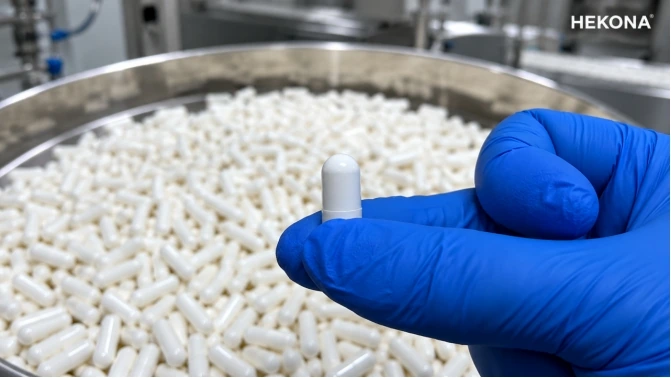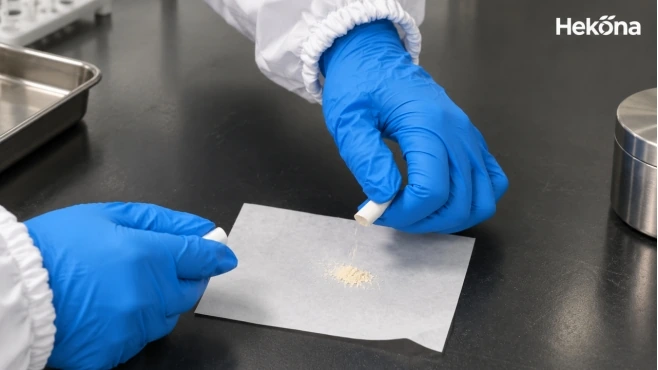
However, on paper it can look easy to just switch one folate for another in a supplement formula. In commercial production, it can have implications for raw-material specifications; batch calculations; Supplement Facts; blending controls and testing to stability work (all the way down line); even artwork that is close-to-final approval. In product release, it may impact raw-material specifications and batch computations; Supplement Facts rules; blending controls; testing/stability work as well as already-approving artwork
What is useful for brand owners to ask, however, is not simply “Which folate form performs better? That is “If we choose one form instead of the other, what changes in manufacturing file? The relevant question for brand owners is not whether says “Which folate form of vitamin B9 is better? The question becomes, what does the manufacturing file look like if we take one form versus another?
This matters because a high-quality ingredient story is only useful if the chosen material can be obtained and quantified, mixed together, tested for quality metrics that define stability in the finished product. That difference is important because your premium ingredient story only works if the material you choose meets six criteria that means it can be sourced, calculated, blended tested and then labelled to definitively maintain its stability in a final product.
For a real-world example: Hekona NeuroActiveFolate & DHA Complex. It is a combination of Quatrefolic® active folate, plant-based DHA and EFA and B vitamins with ferrous glycinate. The question of manufacturing is not whether you can find folate that acid looks good on a brochure from the supplier; it would be does this precise material function by means of the whole formula and factory pathway.
1. Start With the Exact Folate Material You Will Buy
Folic acid is a more specific synthetic form of folate. However, “methylfolate” may indeed designate a number of commercial 5-MTHF preparations. Two products labeled with similar shorthand could differ in salt form, stabilizer, carrier product or degree of dilution applied to them during manufacture and analysis undertaken (assay basis), storage conditions indicated by cite landmarks given on the label’s front side mainly –although this is not important per see but may play a role–the actual branded grade provided. Two products sold under similar shorthand may differ in salt form, stabilizer, carrierworkup solvent,dilutionorassaybasis or branded grade.
The Folate Fact Sheet for Health Professionals from NIH Office of Dietary Supplements considers folic acid and 5-MTHF as separate forms of the same nutrient and refers to multiple names used in label descriptions relating to 5-MTHF. That’s good scientific background, but not a specification for the drum that will be produced. That’s useful scientific background, but it isn’t a buying specification for the drum that’s going to go into production
Before formula approval, the supplier file should answer:
- Exact chemical form and salt or stabilizing form, where relevant
- Commercial grade, supplier, and material code
- Active assay and the basis on which that assay is reported
- Carrier, diluent, or other excipients
- Moisture and storage requirements
- Identity and assay methods
- Expiry or retest information
Once approved, use the same material name and code across purchasing, formulation, sample requests, batch records, and change control. Multiple internal names for one material create avoidable purchasing and production risk.
2. Rebuild the Batch Calculation — Do Not Carry Over the Old Input
Target of the label could be only a few hundred micrograms. The powder, diluted or borne and ordered by the kilogram. Assay, carrier, batch size / serving size counting as well. Assay, carrier, batch size serving size and unit count link the two
Label target does not automatically equal raw-material input.
A controlled calculation should show:
- Target folate amount per serving and the selected mcg DFE basis
- Active amount required per serving
- Number of servings in the batch
- Supplier assay and reporting basis
- Carrier or dilution fraction, where applicable
- Calculated raw-material input
- Reviewer, version, approval date, and rounding rule
One simple test which is useful in practice: does a reviewer, who missed the first project meeting manage to recalculate from the controlled file (CC-F1) by using lookup functions (e.g. VLOOKUP how much material there was on what batch sheet? But if a key assumption is only present in some call or chat or old email, this calculation isn’t yet robust enough for production-level commercial use. Here is a simple but useful test: can an independent reviewer (who was not in attendance at the first meeting on that project) reproduce the weight of batch sheet from within a controlled file? Does an assumption exist in only a call, chat or old email the calculation is not mature enough to commercially build-out
Handle lot potency deliberately
For example, how you measure potency, as well as the water and carrier can alter input delivery of a comparable active target. Determine prior to production whether any adjustments for a lot result will be calculated, who calculates it and reviews/approves its recording. Determine in advance if production will make allowances for a lot result, who does the calculation and review it are documented.
Do not quietly overwrite the approved master formula. Keep the master version intact and place any lot-specific calculation with the affected batch record.
3. Recheck the U.S. Supplement Facts — Especially mcg DFE
For the U.S., folate is reported in micrograms of Dietary Folate Equivalents. This is what makes a switch in folate source impact more than just the ingredient list. We must review the working formula and label file together before releasing artwork. Work of formula and label file should be reviewed together before artwork is given out
| Check | Question to Resolve |
| Raw-material input | What exact material and quantity enter the batch? |
| Active folate per serving | How much active folate does the finished serving provide? |
| mcg DFE declaration | What conversion basis supports the label value? |
| % Daily Value | Does the percentage match the approved declaration? |
| Ingredient wording | Does the ingredient name match the purchased material? |
| Serving size | How many capsules make one serving? |
| Version control | Do formula, specification, and artwork refer to the same version? |
A supplier switch can change the salt, assay, carrier, or commercial grade. That should return the label to technical review rather than being treated as a simple vendor-address change.
For a broader pre-print review, Hekona’s capsule label checks before printing bring formula, serving size, declarations, claims, package information, and production records into the same approval process. The folate-source calculation should sit in that same file.
4. Treat Low-Dose Folate as a Blending-Control Question
A small addition of folate must be uniformly distributed throughout the capsule blend. It can maintain total capsule weight, but it cannot see if a micro-dose ingredient is properly dispersed inside that weight. A filler, on the other hand, can see how much total weight in a capsule but cannot tell whether or not an ingredient that requires dosing is evenly distributed inside of it.
Development should begin with the commercial grade that will actually be ordered. Record its concentration, carrier, particle behavior, and bulk properties before deciding how it enters the blend.
Possible controls include:
- A premix or staged addition
- An appropriate scale for the small addition
- Defined screening or preparation steps
- A controlled order of addition
- Mixer, time, and load parameters
- Transfer controls and, where appropriate, carrier rinse
- Defined sampling locations
- Reconciliation of material remaining in tools, liners, or containers
One caution: visual uniformity is not potency uniformity. A powder blend can look even while a low-dose folate addition is not distributed adequately.
The capsule manufacturing process at Hekona includes the entire route from weighing and blending, through any necessary granulation, filling of capsules with dry powder raw material (including in-process inspection), metal detection and finished testing. The pragmatic question with a low-dose folate is where may the material remain, or become isolated or inequitable — and also their controls in that master record.
5. Test the Formula That Will Actually Be Sold
No folate name gives the finished capsule an automatic shelf life. The selected grade enters the stability system together with companion ingredients, processing conditions, capsule shell, package, and storage environment.
A short risk assessment can define what may change and what observation would reveal that change. Depending on the product, this may include:
- Folate identity or an appropriate stability-indicating assay
- Appearance and odor
- Capsule-shell condition
- Moisture or another relevant physical measure
- Disintegration
- Selected microbiological attributes
- Package condition
Do not paste every test into every pull point. Each test should answer a defined stability question, and acceptance limits should be agreed before results are generated.
In the example of NeuroActiveFolate & DHA Complex, it is folate encompassed by a matrix composed of DHA-related material, B vitamins (Co-Factor), iron and formulation aids. As such, development may have to move beyond simply folate assay towards distribution and flow or capsule fit odor appearance with consideration of package protection. Thus development may need to probe on distribution, flow, capsule fit together with odor appearance and defense of the bundle over folate assay.
Accelerated work is useful — but it is not a full real-time history
SRM studies are designed to discover these weaknesses earlier in addition to being able to compare different packaging options. A short stress study alone does not turn into a complete shelf-life record. While units should continue to age in real-time, any premature extrapolation must justify the approach and document its limitations. If your extrapolation is available much sooner than or before clinical trial outcomes, you should continue to age real-time units and carefully document the rationale and limitations of any conclusion made by such an early informatic about in vivo therapeutic efficacy.
A new grade, carrier, supplier, process, shell, or package can also make an older chamber sample a poor representative of the product now being ordered.

Put the sales pack into the protocol
The protocol should identify the bottle or blister, closure, liner or seal, desiccant, capsule count, headspace, and storage wording. Together, these features sit between the formula and light, oxygen, moisture, and repeated daily opening.
If a development jar is used instead, explain how it relates to the final sales pack. Convenience alone is not a technical justification.
Hekona’s finished-product assurance framework includes active-content validation, physical inspection, package checks and stability evaluations as well as batch documentation and traceability. That framework at the project level should be manifested as named analytes, methods and conditions, pull dates and acceptance limits. This framework should be translated to project level, describing specific analytes, methods (if applicable), method conditions and pull dates with acceptance limits.
6. Make the Commercial Choice With the Whole File — Not the Ingredient Story Alone
The marketing story is part of the decision-making process for choosing methylfolate over folic-acid, but it cannot stop there. To be of any commercial use, cost, assay math (which is a whole different area), regulatory review and approval process as well as method capabilities for supply continuity blending behavior and stability would need to also match. In addition to supply continuity (commercially useful comparison), things such as cost, assay math, regulatory review, blends behavior and stability also have a role
| Commercial Factor | Question |
| Supply continuity | Can the same material and grade be sourced consistently? |
| Specification clarity | Are identity, assay, carrier, storage, and methods clearly defined? |
| Cost | Does the material fit the target cost of goods? |
| Calculation | Can the dose be translated into a reproducible raw-material input? |
| Testing | Can incoming and finished-product requirements be verified appropriately? |
| Labeling | Can the destination-market declaration be supported? |
| Blending | Can a low-dose ingredient be distributed consistently? |
| Stability | Does the selected material work in the full formula and final pack? |
If it cannot be sourced or measured reliably, a premium grade are renders pointless. There is no free ride for folic acid: batch math, label values and records that don’t match — halt production until the document has been corrected. Folic acid does not have a free ride either: if there is discrepancy between batch calculations, label values and records production shall cease until the file has been corrected
7. What to Send Your Manufacturer Before Final Formula Approval
A manufacturer can make a better technical assessment when the project arrives as a complete brief rather than an isolated preference for one folate name.
- Exact folate source and supplier specification
- Target mcg DFE per serving
- Serving size and complete formula
- Intended claims and destination market
- Capsule and packaging requirements
- Storage statement and target shelf life
- Forecast volume
- Testing and documentation expectations
That full file — formulation, dosage form, process from starting material to finished product including packaging components and test methods together with an analytical validation package where appropriate can then be evaluated against Hekona’s manufacturing ability as opposed to a preferred ingredient. So the manufacturing capabilities of Hekona can then be cross-checked with that entire file — formulation, dosage form, process (here), packaging testing and documentation instead of a single ingredient preference.
8. Define the Change Triggers Before Commercial Release
Before approval, define which changes send the project back to technical review. Typical triggers include supplier, grade, assay, carrier, conversion basis, process, shell, or package changes.
When one of those changes occurs, review the affected calculation, specification, label, stability work, and production record. Document who made the decision, what changed, and when it was approved.
Conclusion: Compare Two Manufacturing Systems, Not Two Ingredient Names
When it comes to private label supplements, the choice of methylfolate versus folic acid isn’t simply a matter of ingredient positioning. The Keep sack can be based on that needs to clean the purchase spec, batch calculation, mcg DFE declaration and blend instruction release limits stability protocol final packaging. It has to link succinctly with the purchase specification, batch calculation, mcg DFE declaration (unless of course modelling report data is used), blending instruction based on testing/ production prescriptions if required release limits stability protocol and final package requirements
Approve the material that will actually be purchased first. Then align the rest of the commercial file behind that decision.
That connected file — not the ingredient name by itself — is what makes the formula reproducible, reviewable, and ready for commercial production.
FAQ
Can methylfolate and folic acid be treated as the same raw material?
No. They are different folate forms. Use the exact purchased material, grade, and assay in the controlled file rather than swapping the names.
What does mcg DFE mean?
It means micrograms of Dietary Folate Equivalents. Keep the approved calculation with the formula and review the declaration against current requirements for the destination market.
Can the supplier assay be copied directly into the batch formula?
Not without interpretation. Confirm what the assay represents, its reporting basis, and how carrier and moisture are treated before calculating the raw-material input.
Does a branded 5-MTHF source remove the need for finished-product controls?
No. Supplier controls apply to the incoming material. The blended, filled, and packed product still requires appropriate production controls, release testing, and stability support.
Why does a very small folate input need special blending attention?
The reasoning behind this being a small percentage of capsule fill only. Additive sequence also should be based on the real material and the rest of the blend (prep). The addition sequence, premix and transfer should be designed according to the commercial sample so that it will reach its actual design in terms of blending with rest of blend.
Does changing folate supplier automatically mean a new stability study?
Not always, but it should prompt a technical evaluation? Modifications in salt form, carrier, assay etc. or other critical specifications may result in the existing stability sample no longer representing the commercial product. i.e., the stability sample remains representative of the commercial product.
What should be included in the manufacturer brief?
Include the exact source and specification, target mcg DFE, serving size, full formula, market, claims, capsule and pack requirements, storage statement, forecast, shelf-life target, and testing expectations. Mark open items and assign an owner.