
 “How Many Capsules Should I Take” looks like a simple consumer question. For a private label supplement brand, it is much more than that. It affects serving size, formula strength, label wording, packaging cost, MOQ planning, and whether customers can keep using the product without confusion.
For small and medium-sized health product brands, in addition to avoiding trading companies that lack quality testing and quality control, they should also be careful not to place large orders with the primary supplier simply because the price is low. If a stock formula is available, 100–300 bottles can work for samples, distributor review, packaging checks, and early market feedback. If no stock formula fits your target positioning and the product needs to be made to your own requirements, 500 MOQ is a more practical starting point.
Why Capsule Count Matters for Private Label Brands
Capsule count decides how your product feels in daily use. A formula may look strong on paper, but if the customer has to take too many capsules or cannot tell when to take them, repeat purchase can drop. This is a small detail, but in supplement selling, small details often cost real money.
Consumer Intake Clarity
Your customer wants a clear answer: how many capsules per day, and when should they take them? Simple wording such as “take 2 capsules daily with meals” is easier to follow than loose instructions. Clear intake directions also reduce customer service questions.
Serving Size and Formula Strength
Serving size is the amount taken at one time. Capsule count is how many capsules deliver that serving. A one-capsule serving may work for a simple formula. A two-capsule serving is often more realistic for botanical blends, metabolism formulas, or multi-ingredient products.
Trust Before Scale
Many smaller brands worry about buying from trading companies that cannot control real production. The concern is fair. A reliable capsule product needs raw material checks, batch records, filling accuracy, and finished product testing. A low quote is not useful if the next batch is not the same as the first one.
How Many Capsules Should I Take in Formula Design
How Many Capsules Should I Take should be answered during product development, not after production. The right capsule count comes from active dosage, capsule size, shell choice, fill weight, and the market you plan to enter.
Active Ingredient Load
Metabolism support formulas may include botanical extracts, citrus flavanones, chlorogenic acid sources, minerals, or energy-related ingredients. Each ingredient has its own density and use level. If the formula carries several active ingredients, one capsule may not hold enough material without making the product weaker than expected.
Capsule Shell Selection
Hard capsules can use gelatin, vegetarian HPMC, pullulan, or custom-colored shells. Vegan products, clean-label lines, and premium formulas may need different shell choices. Shell selection also affects appearance, moisture behavior, and brand positioning.
Daily Use Habit
One or two capsules daily is easier for most customers. Three or four capsules may still work when the formula story is strong and the use routine is clear. The key is not to force the lowest capsule count. The key is to make the serving believable and easy to repeat.
Metabolism Support Product Options
Metabolism products are a practical category for private label testing because the use case is easy to explain. Buyers can start with a stock direction, test response, and only move into custom development when the product has stronger proof.
Carb and Fat Support
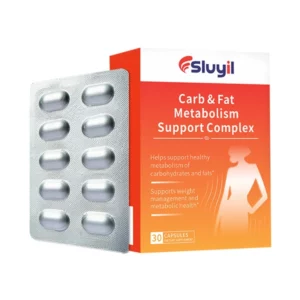
For brands building a meal-time metabolism line, Carb & Fat Metabolism Support Complex gives you a ready product direction for carb and fat metabolism support. It can suit e-commerce testing, distributor samples, and early packaging trials. When stock is available, 100–300 bottles can be enough to see whether the concept deserves a larger order.
Energy and Vitality Support
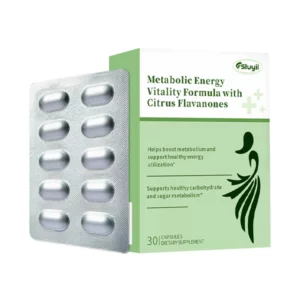 For a broader wellness angle, Metabolic Energy & Vitality Formula with Citrus Flavanones can support a daily vitality and metabolism concept. This type of positioning is often easier to manage than aggressive weight-loss language, especially for long-term brand building.
Stock Testing Before Custom Work
Stock formula testing helps you check price, capsule count, bottle count, label style, and buyer reaction before paying for a full custom project. If the response is good, you can adjust the formula, capsule shell, packaging, or dosage direction later. If no stock formula fits, the 500 MOQ route is the point where custom work becomes more realistic.
MOQ and Compliance Decisions
MOQ should match your business stage. Starting too large can trap cash in slow inventory. Starting too small with an unqualified supplier can cause worse problems: unstable formulas, weak documentation, and goods that do not match the approved sample.
100–300 Bottle Sample Runs
When stock formulas are available, 100–300 bottles can support sampling, small online testing, buyer review, and creator seeding. This stage is not mainly about margin. It is about checking whether the formula, capsule count, packaging, and price make sense.
500 MOQ Custom Production
Custom capsules need formula review, raw material sourcing, sample work, filling setup, packaging matching, and release testing. That is why 500 MOQ is a reasonable starting point when the product must be made to your own requirements. It keeps the project serious without forcing a smaller brand into a large first order.
NSF and Amazon Readiness
For U.S. marketplace projects, NSF/ANSI 455-2 has become a serious compliance signal. It is widely treated as one of the most valuable third-party GMP standards for dietary supplement facilities. In China, only a relatively limited group of companies can show this level of third-party proof, often discussed in the market as just over one hundred companies. For Amazon-focused launches, this is no longer a decorative certificate. It can become a hard checkpoint. Before placing an order, you should ask for current certificates, COAs, testing files, and batch records.
Quality Data Behind Every Capsule
When buyers type How Many Capsules Should I Take, they usually focus on the label. A better private label team also checks what happens behind the label. Each capsule should carry a consistent amount of active content, and that depends on sourcing, mixing, filling, packaging, and release testing.
| Quality Factor | Published Capability or Control Point | Buyer Value |
| Facility Size | 120,000 square feet | Supports multi-line production |
| Annual Capsule Capacity | 2 billion capsules | Handles samples and larger reorders |
| Stock Products | 100+ ready-to-use formulas | Shortens test cycles |
| Served Brands | 500+ global brands | Shows export project experience |
| Mixing Uniformity | CV ≤ 5% | Helps keep actives evenly distributed |
| Filling Accuracy | RSD ≤ 2% | Supports stable capsule weight |
| Certifications | FDA registration, GMP, ISO 22000, HACCP | Supports export review |
Mixing Uniformity
A two-capsule serving only works if the active ingredients are evenly distributed. Multi-ingredient powders can separate during blending when particle size and density differ. Controlled mixing reduces this risk and helps each batch stay closer to the approved formula.
Filling Accuracy
Poor powder flow can lead to underfilled or overweight capsules. Good production uses automatic filling, in-line weighing, polishing, metal detection, and rejection of nonconforming capsules. These controls matter because online buyers notice inconsistency fast.
Packaging Stability
Moisture and oxygen can damage some capsule formulas. PET bottles, HDPE bottles, amber packaging, desiccants, foil pouches, and induction seals should match the formula. The capsule manufacturing process should connect with packaging decisions from the start.
Build a Private Label Capsule Line with Hekona
A private label capsule project rarely begins with a large order. For many small and medium supplement brands, the first concern is more practical: can the formula be tested safely, can the sample match the final batch, and can the supplier support the brand after the first trial?
A good capsule project should help you confirm the formula direction, capsule count, packaging style, and buyer response before you commit to a larger production run.
Raw Material Confidence
Ingredient quality is often where problems start. A sample may look acceptable, but weak specifications, unclear sources, or unstable batches can cause problems once the order moves into repeat production.
With structured raw material sourcing, your project can start with better traceability and fewer surprises.
This matters for metabolism, vitality, sleep, mood, beauty, and sports nutrition formulas, where customers may not see ingredient quality directly but will notice consistency over time.
Manufacturing Room to Grow
Your brand may begin with one capsule product, but the next step may be a tablet, powder, liquid drop, or premix.
That is why broad manufacturing capabilities can be useful from the beginning. You can test one formula first, review the market response, and then decide whether to refine the same product or build a wider supplement line.
This is a cleaner path than switching suppliers every time your product format changes.
Practical Project Guidance
Private label buyers need more than a unit price. Before placing an order, you need clear answers about serving size, capsule count, MOQ, sample timing, packaging options, testing records, and reorder planning.
The people behind Hekona’s project support can help connect these details so the product is not planned in separate pieces.
For brands comparing suppliers, Hekona also gives you a clear starting point to review service scope, product categories, and manufacturing direction before a quote discussion begins.
How Many Capsules Should I Take is finally a question about trust and repeat use. Your customer wants a simple daily routine. Your brand needs a product that can be made consistently from sample to reorder.
If a suitable stock formula is available, 100–300 bottles can support a careful first test. If the product needs to be made to your own requirements, planning from 500 MOQ gives the project enough room for proper sourcing, testing, and production setup.
FAQ
Q1: How Many Capsules Should I Take for a Private Label Supplement?
A: It depends on the formula, active dosage, capsule size, and label direction. A simple formula may fit one capsule. A complex formula may need two or more capsules per serving.
Q2: Can a Small Brand Start with 100–300 Bottles?
A: Yes, when a suitable stock formula is available. This quantity can support sampling, buyer review, packaging checks, and early market testing.
Q3: Why Does Custom Capsule Production Usually Start from 500 MOQ?
A: Custom work needs sourcing, formula review, sample testing, filling setup, packaging matching, and quality release. A 500 MOQ keeps the project practical.
Q4: Is NSF/ANSI 455-2 Important for Amazon Supplement Sellers?
A: Yes. For Amazon-focused dietary supplement projects, NSF/ANSI 455-2 is a strong third-party GMP signal and can be an important compliance checkpoint.
Q5: How Can You Avoid Poor Supplier Quality?
A: Ask for real manufacturing capability, batch records, COAs, filling accuracy data, certifications, and sample support before placing a large order.