
A 40:1 ratio is easy to put on the front of an inositol product.
It is only one part of the formula.
For a brand developing an inositol supplement, the more useful questions are:
- How much Myo-Inositol is provided per serving?
- How much D-Chiro-Inositol is provided?
- How many capsules make one serving?
- What other active ingredients are being added?
- Can the target serving realistically fit into capsules?
- Would a powder formatmake more sense at a higher serving load?
Two formulas can both use a 40:1 ratio and still be very different products.
For example, 400 mg of Myo-Inositol with 10 mg of D-Chiro-Inositol and 2,000 mg with 50 mg both follow the same 40:1 relationship. The ratio is the same. The total active load is not.
That difference matters when the formula moves from a spreadsheet into an actual capsule, bottle and commercial production plan.
Start With the Two Inositol Forms Separately
“Inositol” should not be treated as one undifferentiated ingredient when the formula uses more than one form.
Myo-Inositol and D-Chiro-Inositol should be identified separately in the working formula, together with the amount of each per serving.
For product development, we prefer to review:
Myo-Inositol amount → D-Chiro-Inositol amount → ratio → total active load
rather than starting from the ratio alone.
This is especially important when the front-panel concept is built around “40:1.”
A ratio tells the buyer how two ingredients relate to each other. It does not tell the buyer how much product is actually delivered in one serving.
The original label-review draft makes the same distinction: products can share the same 40:1 ratio while using very different total amounts and serving structures.
40:1 Is a Ratio, Not a Dose
The math is simple:
40 parts Myo-Inositol : 1 part D-Chiro-Inositol
Examples:
| Myo-Inositol | D-Chiro-Inositol | Ratio |
| 400 mg | 10 mg | 40:1 |
| 1,000 mg | 25 mg | 40:1 |
| 2,000 mg | 50 mg | 40:1 |
| 4,000 mg | 100 mg | 40:1 |
These are mathematical examples only, not dosage recommendations.
The important point for a brand is that the ratio and the serving amount are two separate decisions.
A formula with:
2,000 mg Myo-Inositol + 50 mg D-Chiro-Inositol
already contains 2,050 mg of active material before adding folate, CoQ10, PQQ, astaxanthin, minerals, botanicals or formulation aids.
That is where the conversation starts to move away from marketing and into actual product development.
Serving Size Changes the Product
Once the ingredient amounts are set, the next question is not the front-panel claim.
It is:
How many capsules will the customer need for one serving?
A 40:1 formula with a low total active load may fit comfortably into a capsule format.
A higher-load formula can be very different.
The number of capsules required depends on:
- total powder weight;
- bulk density;
- capsule size;
- powder flow;
- supporting active ingredients;
- excipients required for production.
This is why capsule count should not be estimated from milligrams alone.
A dense material and a low-density botanical powder can occupy very different volumes at the same weight.
The original article correctly points out that capsule volume, powder bulk density, shell size and additional actives all influence how many capsules are needed per serving.
Do Not Force the Formula Into Fewer Capsules

Brands naturally prefer a convenient serving.
Nobody wants a product that requires an unnecessary number of capsules.
But reducing capsule count at all costs can create another problem: the formula starts being changed to fit the package rather than the package being selected for the formula.
If the active load is too large for the intended capsule count, there are several options:
- move to a larger capsule size;
- increase the number of capsules per serving;
- reduce or simplify supporting ingredients;
- reconsider the target serving;
- compare a powder format with the capsule concept.
The right answer depends on the formula.
There is no useful rule saying an inositol supplement “should” always be two capsules or four capsules.
The actual blend needs to be checked.
When Powder May Make More Sense Than Capsules
This is one of the decisions brands often reach later than they should.
If the planned inositol serving is already several grams before flavors, supporting actives or formulation aids are added, a powder deserves serious consideration.
Powder can be more practical when the formula needs:
- a higher active load per serving;
- fewer unit-dose limitations;
- room for additional supporting ingredients;
- flexible serving formats.
Capsules still have advantages in portability, fixed dosing and simple packaging.
The point is not that powder is automatically better.
It is that dosage form should follow the formula, not the other way around.
For a higher-load inositol project, we would normally compare:
target dose + bulk density + capsule size + capsules per serving + pack count
before finalizing the dosage form.
That comparison also affects packaging cost and the commercial format of the final product.
Look at the Full Formula, Not Only the Inositol Ratio
Once other active ingredients are added, the product is no longer just a Myo-Inositol and D-Chiro-Inositol blend.
Supporting ingredients may include:
- Active Folate
- CoQ10
- PQQ
- Astaxanthin
- Vitamins
- Minerals
- Botanical extracts
At that point, the brand needs a clear formula hierarchy.
Which ingredient is the hero?
Which ingredients support the product position?
Which ingredients are being added mainly because they are popular in the category?
Not every ingredient needs to become a front-label headline.
A formula is usually easier to explain, manufacture and position when the role of each ingredient is clear.
A 40:1 HEKONA Formula Example
HEKONA’s Women’s Cycle Balance Inositol Blend uses Myo-Inositol and D-Chiro-Inositol in a 40:1 ratio and includes Active Folate, CoQ10, PQQ and Astaxanthin in the formula concept.
The useful lesson from a formula like this is not simply that it contains a 40:1 ratio.
The development questions are:
What amount of each inositol form is used per serving?
How much space remains after the supporting actives are added?
How many capsules are needed?
Does the final serving still make sense commercially?
Are all label declarations based on the same approved formula?
Those questions have to be answered before the artwork and packaging are finalized.
The 40:1 ratio can remain part of the product positioning, but it should not replace the actual serving information.
Compare Formula Concepts on the Same Basis
When a brand is comparing two possible inositol formulas, using the same worksheet makes the decision much easier.
| Review Point | Formula A | Formula B |
| Myo-Inositol per serving |
|
|
| D-Chiro-Inositol per serving |
|
|
| Myo:D-Chiro ratio |
|
|
| Total inositol load |
|
|
| Supporting actives |
|
|
| Total target fill |
|
|
| Capsules per serving |
|
|
| Capsule size |
|
|
| Dosage form |
|
|
| Servings per container |
|
|
| Packaging format |
|
|
| Testing requirements |
|
|
This is more useful than comparing two front labels that both say “40:1.”
The ratio may be identical while the actual product structure is very different.
What the Label Should Confirm
Once the formula is stable, the label should reflect the same numbers the manufacturing team is using.
For an inositol capsule, check:
Serving Size
Myo-Inositol amount per serving
D-Chiro-Inositol amount per serving
Supporting active ingredients
Servings Per Container
Suggested Use
Other Ingredients
Capsule-shell material
If one of these changes during development, the label may need another review.
A common mistake is to update the formula without updating every related part of the artwork.
That becomes more likely when several formula versions are moving between R&D, purchasing, the brand and the designer at the same time.
Raw-Material Specification Still Matters
Two ingredients with the same general name are not always the same commercial material.
For each raw material, the manufacturer should know the approved specification, supplier and lot being used.
For supporting botanicals or specialty ingredients, this may include:
- source;
- form;
- assay or standardized constituent;
- carrier system;
- particle characteristics;
- other specification details relevant to the formula.
A marketing name should never replace the actual raw-material specification.
The same principle applies to the label.
The ingredient description used on the artwork should remain consistent with the material being purchased and released by Quality.
What Sits Behind the 40:1 Numbers in Production
The label can confirm the declared amounts, but it cannot show everything that happens during manufacturing.
For a commercial inositol capsule project, the production review may include:
- raw-material identity;
- weighing accuracy;
- blending;
- blend uniformity where relevant;
- powder flow;
- fill weight;
- capsule locking;
- microbiological requirements;
- heavy-metal limits;
- finished-product testing.
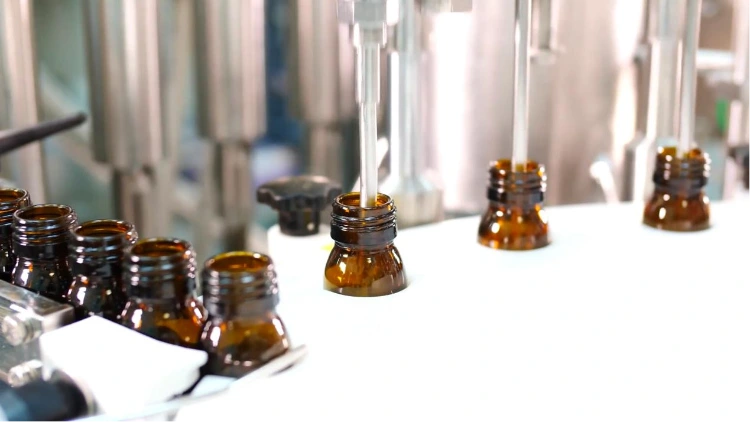
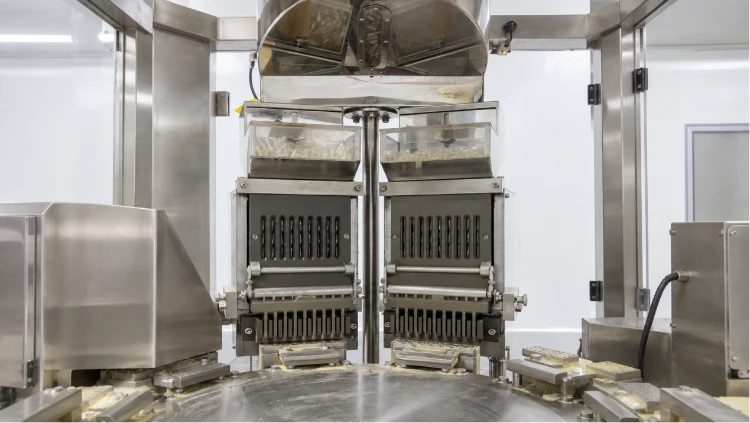
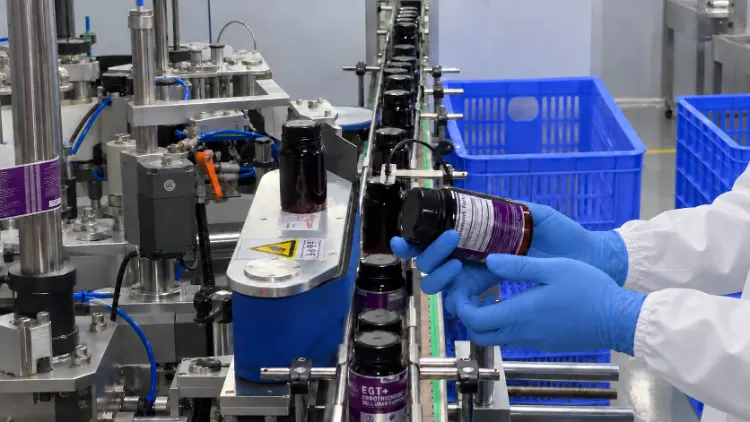
HEKONA’s capsule-manufacturing process includes raw-material review, weighing and mixing, granulation where needed, filling and locking, in-line rejection, polishing, metal detection and finished-product testing. The original source also notes HPLC potency analysis and capsule-disintegration testing among HEKONA’s published laboratory capabilities.
That does not mean every inositol SKU needs the same test panel.
The test plan should follow the final formula, ingredient specifications and target market.
For a private-label project, the useful questions are:
Which items will appear on the finished-product COA?
Which test methods are being used?
What are the agreed acceptance criteria?
Which documents will be supplied with the commercial batch?
Be Careful With “Clinically Validated” Language
A 40:1 ratio can be part of the commercial positioning of an inositol supplement.
It should not automatically be treated as proof that the same ratio, dose or finished formula is appropriate for every user or every health claim.
For a brand, the more useful claim review is:
Is the evidence about the same ingredient?
Is the ingredient form comparable?
Is the amount comparable?
Does the research support the specific wording being used?
Is the claim about one ingredient, or about the finished formula?
This is particularly important when marketing moves into hormone, fertility, insulin-signaling or PCOS-related language.
Those areas need more care than a general formulation statement such as:
Myo-Inositol and D-Chiro-Inositol in a 40:1 ratio.
The formula fact and the health claim are not the same thing.
Before Finalizing an Inositol Product, Confirm These Five Decisions
For most private-label inositol projects, we would want these five points clear before artwork approval:
- Ingredient structure
Myo-Inositol only, or Myo-Inositol plus D-Chiro-Inositol? - Ratio and actual amount
What is the ratio, and what amount of each form is delivered per serving? - Serving structure
How many capsules or how much powder makes one serving? - Supporting formula
Which additional actives are included, and what role do they have? - Dosage form and packaging
Does the formula still make sense as capsules, or should powder also be evaluated?
If those decisions are not settled, label development is usually premature.
Final Takeaway
For an inositol supplement, 40:1 is easy to understand but easy to overuse as the whole product story.
A brand still needs to decide:
Myo-Inositol amount
D-Chiro-Inositol amount
total active load
capsules per serving
supporting ingredients
dosage form
testing and packaging
Two formulas can both say 40:1 and still be completely different commercial products.
That is why we prefer to review the ratio together with the serving structure and actual manufacturing format before the label is finalized.
For brands developing a custom inositol product, HEKONA can review the formula structure, capsule fit, powder option, serving size, ingredient specifications and packaging requirements before commercial production.
FAQ
Is a 40:1 Inositol Ratio the Same as a Dose?
No.
The ratio only describes the relationship between Myo-Inositol and D-Chiro-Inositol.
For example:
400 mg + 10 mg
and:
2,000 mg + 50 mg
are both 40:1, but the total active amounts are very different.
How Does Serving Size Affect an Inositol Capsule Formula?
Serving size determines how much active material needs to fit into the planned number of capsules.
A higher active load may require:
- a larger capsule;
- more capsules per serving;
- fewer supporting ingredients;
- or a different dosage form.
The actual decision should be based on the finished blend rather than ingredient weight alone.
Why Can a Higher-Load Inositol Formula Require Several Capsules?
Capsule capacity is limited by volume, not just milligrams.
Bulk density, powder flow, capsule size, excipients and supporting actives all affect how much material can be filled into one capsule.
When Should a Brand Compare Powder With Capsules?
Powder is worth evaluating when the target serving becomes difficult to fit into a practical capsule count.
The comparison should consider:
total active load, bulk density, serving size, capsule count, packaging and how the product is intended to be used.
Neither format is automatically better. The formula should drive the decision.