A liquid formula can look simple on paper.
You have the active ingredients, the amount per serving, a flavor direction, and a bottle in mind. A few samples are made, the taste is acceptable, and the project starts to feel close to production.
That is usually where the easy part ends.
Once the same formula has to be mixed in a larger tank, held before filling, packed, shipped, and stored for months, small formulation decisions start to matter much more.
An ingredient that looks dissolved in a fresh sample may settle later. A botanical extract that is manageable at one concentration may become hard to mask when the serving volume is reduced. A change in pH can improve one part of the formula and create another issue somewhere else.
For liquid supplement manufacturing, sample approval is only one step.
The product still has to work as a complete system: formula, process, package, and shelf-life plan.
That applies whether the project is an oral liquid, a small functional shot, a dropper, a metered pump, a liquid sachet, a suspension, an emulsion, or an oil-based concept.
Each format needs to be reviewed around the actual formula.
1. Start With the Serving, Not the Bottle
We often see projects where the package is chosen first.
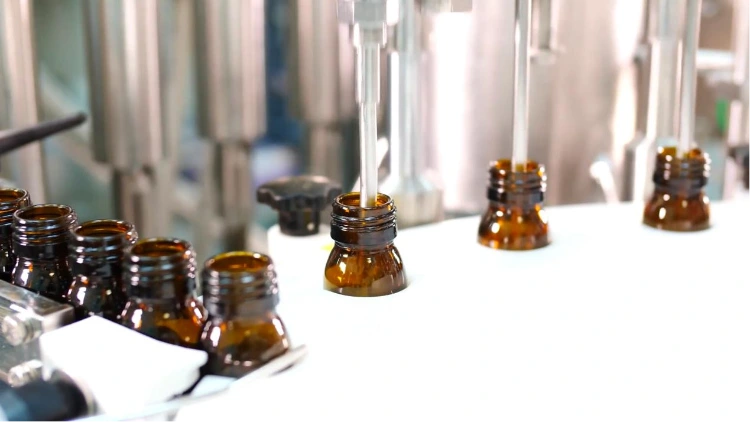
A brand likes a 10 mL bottle, a dropper, or a small shot format, so the formula is then pushed into that volume.
Sometimes it works.
Sometimes it creates unnecessary problems.
The first question should be much simpler:
How much active material needs to be delivered in one serving?
From there, the serving volume can be judged more realistically.
A formula that works well at 30 mL may behave very differently at 10 mL.
Reducing the liquid volume means increasing the concentration. That can affect taste, solubility, viscosity, sediment, and dose delivery.
This is especially relevant for formulas containing several botanical extracts, minerals, concentrated juices, or other ingredients with a strong taste or limited solubility.
Before the package is locked, the project should already have a clear answer for:
- amount of each active per serving;
- serving volume;
- daily use;
- servings per container;
- expected taste profile;
- approximate viscosity;
- intended delivery format.
Once those points are clear, the package becomes easier to evaluate.
A dropper, pump, sachet, shot bottle, or standard oral-liquid bottle should fit the formula. The formula should not have to be rebuilt just because a certain package was selected too early.
2. “Does It Dissolve?” Is Usually Not Enough
Liquid formulas do not all behave like clear drinks.
Some ingredients dissolve well.
Some only partly dissolve.
Some botanical extracts leave fine particles even when the formula is otherwise acceptable.
Oil-soluble materials can require a very different approach from a water-based formula.
So during formulation, we look beyond a simple yes-or-no question about solubility.
We need to know what the ingredient is actually doing in the finished liquid.
Is it dissolved?
Is it dispersed?
Will it remain suspended?
Does it need an emulsion system?
That difference matters later.
If a product is meant to be a suspension, the important points are how quickly the particles settle, whether they form a hard layer, and whether normal shaking brings the product back to a usable state.
Botanical liquids can be particularly variable.
The extract may affect color, odor, bitterness, astringency, and sediment at the same time. Two lots of the same botanical material can also look slightly different even when both meet specification.
This is why a perfectly clear sample is not always the target.
A clear liquid can still precipitate after a few weeks.
A product with light, controlled sediment may be acceptable if it redistributes well and the serving remains reasonably consistent.
For oil-based and emulsion concepts, the review becomes more specific. Separation, oxidation, viscosity, processing conditions, and packaging compatibility all need to be checked before a commercial run is considered.
3. pH and Taste Cannot Be Handled Separately
pH affects more than taste.
It can change how an ingredient behaves, how stable the formula remains, how preservatives perform, and how the liquid interacts with the package.
At the same time, the customer still has to drink the product.
That balance is where many liquid projects become more difficult.
We have seen botanical small-volume concepts where the technical side and the sensory side could not be separated.
The herbal ingredients already brought noticeable bitterness and a strong botanical note.
Adding more sweetness made the product heavy.
Increasing acidity helped one part of the formula but made the herbal character sharper.
The answer was not simply “add more flavor.”
The acid system, sweetness, botanical load, flavor direction, and processing conditions had to be looked at together.
This is why taste work should happen during formulation, not after the technical formula has already been fixed.
Microbial control works the same way.
One pH number does not control the whole product.
Depending on the formula, the control plan may involve hygienic processing, heat treatment, preservatives where suitable, limits on bulk hold time, packaging, and microbiological testing.
A preservative approach that works in one liquid should not be copied blindly into another.
Change the juice level, sugar level, botanical load, acidity, or water activity, and the same system may perform differently.
The original technical draft correctly treated pH and microbial control as linked formulation decisions rather than separate checklist items.
4. Stability Work Should Follow the Weakest Part of the Product
A fresh sample tells you how the product looks today.
It does not tell you how it will look several months later.
For a liquid supplement, the useful stability question is:
What is most likely to change first?
That answer is different from one formula to another.
For one product, color may move first.
For another, sediment may increase.
A different formula may show a change in taste, pH, viscosity, or package performance.
The stability plan should follow those real risks.
Depending on the product, the team may need to monitor active or marker content, pH, microbial quality, flavor, odor, color, sediment, viscosity, redispersibility, leakage, closure performance, or fill volume.
A botanical liquid is a good example.
If the color becomes darker during storage, the next step is not simply to record that the color changed.
The useful question is why.
Was the formula exposed to too much light?
Was oxidation involved?
Did the pH shift?
Did two ingredients interact over time?
Did the package contribute to the change?
That kind of investigation is more useful than treating stability as one pass-or-fail test.
Accelerated testing can help identify weak points earlier in development, but it should not be used as a shortcut to make an unsupported shelf-life claim.
The stability plan should match the actual formula, intended package, target market, and proposed shelf life.
Different liquid products may need different testing scopes.
5. The Package Has to Be Tested With the Real Formula
A liquid that behaves well in a glass beaker has not yet proved that it will behave the same way in its commercial package.
The bottle, closure, liner, light exposure, oxygen entry, and headspace can all affect the finished product.
For acidic formulas, material compatibility matters.
For light-sensitive formulas, the package may need more protection.
For oil-based or emulsion systems, the contact materials deserve closer attention.
Dropper and pump formats add another practical issue: dose delivery.
If a pump is meant to deliver a fixed amount, the actual output needs to be reasonably consistent.
The same applies to a dropper.
Liquid sachets bring a different set of questions around barrier properties, sealing, and transport.
This is why packaging should be brought into the project before the final artwork is printed.
Once the serving size, formula system, and likely package are known, the real formula should be observed in the intended package.
For e-commerce products, shipping is part of the test as well.
A formula may remain chemically stable and still become a commercial problem if the closure leaks, the bottle deforms, or the sachet fails during parcel handling.
6. A Bench Formula Still Has to Become a Production Process
R&D notes are often short.
“Add slowly.”
“Mix until uniform.”
“Adjust pH.”
That can be enough when a formulator is making a few bottles in the lab.
A commercial batch needs more detail.
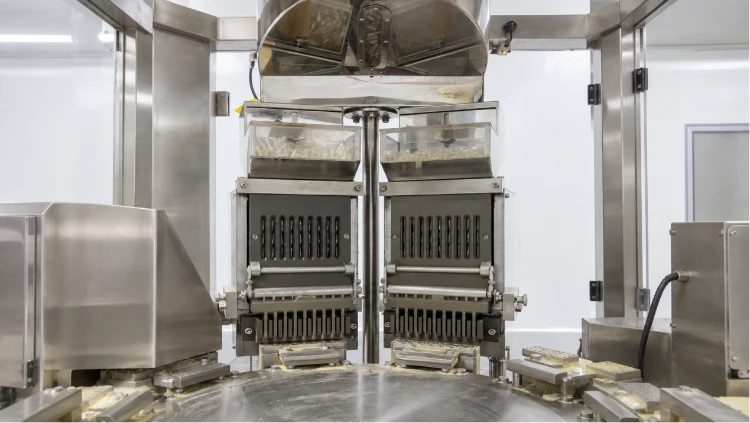
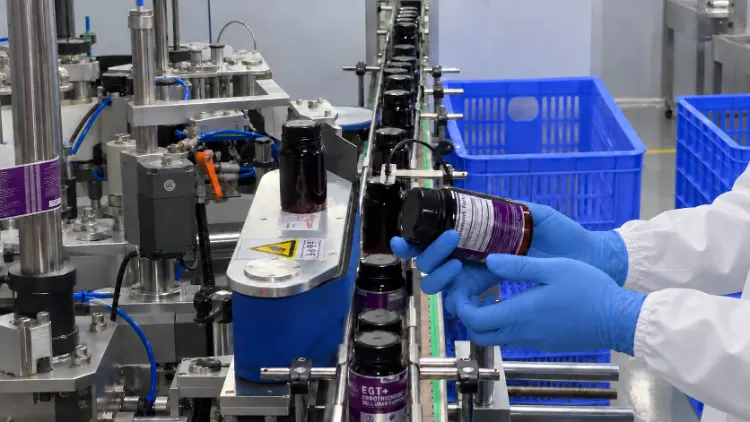
The production team needs to know the addition order, temperature range, mixing time, mixing speed, pH check points, bulk hold time, and filling conditions.
Some ingredients may need to be pre-dissolved.
Some formulas may need filtration or homogenization.
Some may foam during mixing.
Others may settle while the filling line is running.
These are normal scale-up questions.
For a botanical formula that tends to settle, it is not enough to confirm that the tank is uniform at the beginning of filling.
The team also needs to know what happens halfway through the run and near the end.
For a foaming product, the issue may be filling accuracy rather than formulation itself.
For a temperature-sensitive ingredient, addition timing can become important.
A bench sample answers one question:
Can this product concept be made?
Scale-up answers another:
Can it be made the same way repeatedly in commercial production?
If pH, ingredient order, temperature, or formula composition changes during pilot work, the final manufacturing record needs to reflect that change.
The earlier technical draft also noted that bench mixers, production tanks, pumps, hoses, and filling equipment can behave differently, which is exactly why pilot observations need to be captured before routine production. Before Producing a Liquid Suppl…
Keep the Final Project Version in One Place
Liquid projects often involve several teams at the same time.
R&D may update the formula.
Purchasing may change a supplier.
Packaging may change the bottle.
The customer may revise the label.
If those decisions stay scattered across emails, chat messages, and spreadsheets, version control becomes difficult very quickly.
Before production, there should be one approved project set covering the final formula, ingredient specifications, finished-product requirements, packaging, label version, testing scope, and key production parameters.
Open items should stay visible too.
If a stability result is still pending, say so.
If an alternate supplier has not been approved, record it.
If a new package still needs compatibility work, keep it open until the issue is actually closed.
This is basic project control, but it prevents many avoidable mistakes.
What Should a Brand Ask a Liquid Supplement Manufacturer?
A better question than “Can you make liquids?” is to ask how the manufacturer would handle the actual formula.
For example:
- What happens if the botanical extract settles?
- How will taste and solubility be checked in a small serving volume?
- How will a pump or dropper be checked for dose delivery?
- What needs to be reviewed first for an emulsion or oil-based concept?
- Can the proposed package be tested with the real formula?
- Which finished-product testsare included?
- What supports the proposed shelf life?
- How are sample-stage changes transferred into the production record?
A useful answer should be specific.
It should also be acceptable for the manufacturer to say that something still needs testing.
“Everything is possible” is not a technical answer.
In practice, a liquid project usually falls into four groups:
already confirmed, needs sampling, needs stability work, or needs further technical review.
That is a much clearer basis for moving a project forward.
How HEKONA Reviews Liquid Projects
HEKONA currently works with oral liquid and small-format functional liquid projects based on the formula, serving size, and production requirements.
Other formats can be reviewed according to the project.
For dropper, metered-pump, and liquid-sachet concepts, we look at serving volume, viscosity, package structure, and filling requirements.
Suspension, emulsion, and oil-based concepts need a broader technical review before commercial production.
The main questions are practical:
What state will the ingredients have in the finished product?
Will the system remain stable?
Can it be filled reliably?
Does the planned package work with the formula?
Some answers are available at the beginning.
Others only become clear after sampling or stability work.
That distinction is important. We would rather identify an open technical point early than hide it behind a general promise.
Final Takeaway
A liquid supplement is ready for production when the formula, process, and package have been reviewed as one product system.
If one of those three is still changing, commercial production may still be too early.
For HEKONA projects, the normal review starts with the product concept and serving size, then moves through ingredient behavior, taste and pH, stability, packaging, and production conditions.
Dropper, pump, sachet, suspension, emulsion, and oil-based concepts can be evaluated around the actual formula rather than forced into one standard process.
FAQ
1. Does sediment mean a liquid formula is unstable?
Not always.
Some botanical ingredients naturally settle over time.
What matters is whether the sediment keeps increasing, forms a hard layer, affects dose consistency, or fails to redisperse after normal shaking.
A completely clear liquid can also become unstable later, so appearance alone is not enough.
2. Is pH control enough to manage microbial risk?
No.
pH is one part of the control plan.
The formula, raw materials, hygiene, heat treatment, preservatives where suitable, hold time, packaging, and microbiological testing may all need to be considered.
3. Can accelerated stability testing establish shelf life by itself?
No.
It can help reveal potential problems earlier, but the shelf-life basis should still match the actual formula, final package, test methods, and available real-time data.
4. Can production start as soon as the R&D sample is approved?
Not automatically.
Sample approval usually confirms the product direction, taste, appearance, and initial formula.
Production still needs the final raw-material specifications, process parameters, packaging, testing scope, and scale-up conditions.
5. Is a smaller, more concentrated liquid always better?
No.
A smaller serving can be convenient, but it can also increase bitterness, viscosity, solubility problems, and sedimentation risk.
Serving volume should be chosen around the formula.
6. Can one oral-liquid formula be used directly for a dropper, pump, sachet, emulsion, or oil-based format?
Usually not without additional review.
Each format changes something: dose delivery, filling conditions, stability, packaging, or all four.
The formula and final format should be evaluated together before commercial production.