
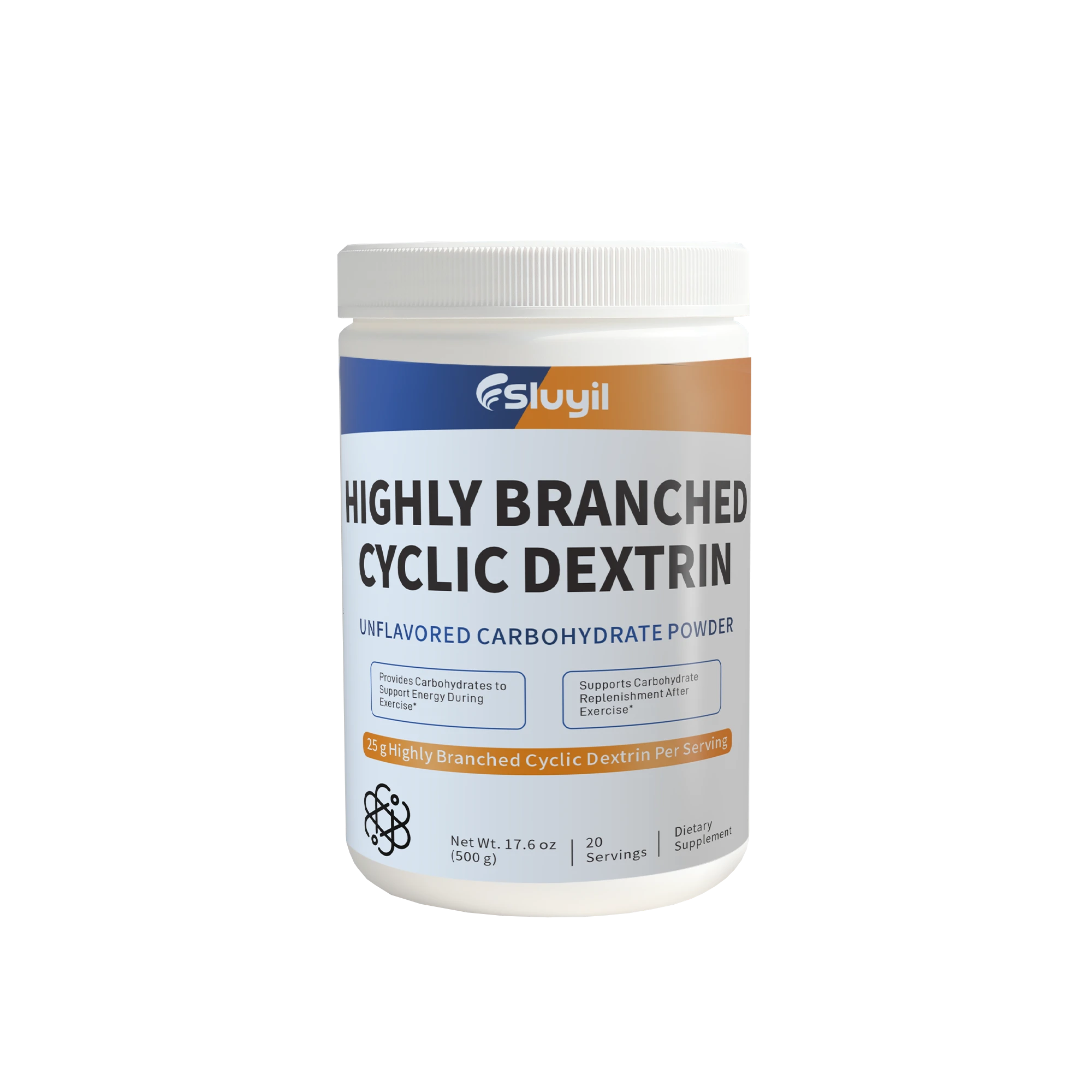
25 g Highly Branched Cyclic Dextrin per Serving
1 Scoop (25 g) | 20 Servings | 500 g | Unflavored
Ready Stock | Private Label Available
A focused performance-carbohydrate powder built around Highly Branched Cyclic Dextrin (HBCD) for training-fuel and intra-workout nutrition concepts.
Unlike basic glucose powders or conventional carbohydrate blends, HBCD is more than simply another source of carbohydrate. From a formulation perspective, its value is connected to how the carbohydrate behaves once it becomes a finished sports drink.
That means product development should consider:
Carbohydrate Source · Beverage Concentration · Solubility · Osmolality · Drinking Experience
For brands developing intra-workout, endurance, or performance-nutrition products, this formula can serve as a specialty carbohydrate SKU rather than a generic carbohydrate powder.
| Component | Per Serving |
| Highly Branched Cyclic Dextrin | 25 g |
| Total Carbohydrate | 24 g |
| Calories | 100 |
Serving Size: 1 Scoop (25 g)
Servings Per Container: 20
Net Weight: 500 g
Flavor: Unflavored
Other Ingredient: Silicon Dioxide
Final directions for use should follow the approved product label for the intended market.
Highly Branched Cyclic Dextrin is a highly branched glucose polymer produced from starch.
For sports-nutrition brands, the important question is not simply how its chemical name differs from other carbohydrates, but how the raw material performs in a finished beverage.
Key formulation considerations include:
Solubility · Viscosity · Molecular Profile · Beverage Concentration · Osmolality · Powder Handling
This is why HBCD is often evaluated for intra-workout and endurance-nutrition applications where the finished drinking experience matters alongside carbohydrate delivery.
For B2B buyers, comparing HBCD raw materials should therefore go beyond:
Price per kilogram
and include review of:
Raw-Material Specification · Solubility · Powder Behavior · Finished Beverage Performance
Each serving provides:
25 g HBCD
The current product directions recommend mixing one scoop with approximately:
12–16 oz of water or another sports beverage
At that dilution range, the powder concentration is roughly in the 5–7% range.
This matters because the consumer does not ultimately use a dry powder. The actual product experience is:
25 g Powder + Water = Finished Sports Drink
Changing the amount of water changes the concentration of the beverage, which can influence:
For this reason, development of an HBCD product should not stop once the dry powder passes specification.
For more technical projects, brands may also evaluate the finished drink at the intended dilution for:
Dissolution · Appearance · Mouthfeel · Beverage Concentration · Osmolality
The formulation should be designed around how the product is actually consumed.
The current product uses:
1 Scoop = 25 g HBCD
This is best understood as a modular carbohydrate serving, rather than a universal carbohydrate target for every athlete or every training session.
Actual carbohydrate strategy may vary according to:
For custom development, it is therefore more practical to define:
Target Carbohydrate Intake → Serving Size → Beverage Volume → Formula Structure → Packaging
rather than selecting a 500 g container first and forcing the serving strategy to fit the package.
This approach gives brands more flexibility when developing products for different sports and usage occasions.
Unflavored is not necessarily a limitation in a performance-carbohydrate product.
In many cases, it provides a more flexible:
Base Formula
Consumers can use the powder on its own or combine it with an existing:
Electrolyte · Amino Acid · Pre-Workout · Intra-Workout
product.
For brands, the same base concept can also be developed into:
This makes the unflavored version useful as a core HBCD SKU, while flavored and multi-ingredient versions can serve as portfolio extensions.
HBCD can support two very different commercial strategies.
A simple HBCD formula offers:
This works particularly well for brands that already sell Creatine, EAA, Electrolytes, or other performance products.
For a more complete intra-workout concept, HBCD can also be evaluated alongside:
Electrolytes
Amino Acids
Hydration Ingredients
Additional Carbohydrate Sources
At higher carbohydrate targets, formulation becomes more complex.
Simply increasing the amount of HBCD may also increase total beverage concentration and serving weight.
The project may then need to review:
Total Carb Load · Water Volume · Carbohydrate System · Osmolality · Flavor · GI Tolerance · Packaging
At that point, the project is no longer just an HBCD powder. It becomes a complete intra-workout beverage-development program.
The manufacturing considerations for HBCD are different from those of Creatine powders or liquid collagen shots.
The product should be evaluated at the water volume consumers are actually expected to use.
A raw material being described as water-soluble does not automatically guarantee an ideal finished drinking experience at every concentration.
The label uses:
1 Scoop = 25 g
but a scoop measures volume, while the label declares weight.
Commercial scoop selection should therefore be validated using the actual finished powder, not only a theoretical scoop-volume chart.
A 500 g container may be opened repeatedly during use.
Packaging design should therefore consider:
Moisture Exposure · Caking · Seal Integrity · Storage Conditions
Silicon Dioxide is included as a technical powder aid to support flow and help manage caking.
For an intra-workout carbohydrate product, the finished beverage matters just as much as the dry powder.
Depending on the project, useful evaluation may include:
Dissolution · Mouthfeel · Appearance · Concentration · Osmolality
This provides a more realistic view of the consumer experience than testing the powder alone.
HBCD fills a different commercial role from the other performance products in a brand portfolio.
For example:
Micronized Creatine Monohydrate
→ Core Performance SKU
Creatine HCl + Monohydrate
→ Differentiated Creatine SKU
Creatine + Hydration Formula
→ Performance + Hydration SKU
Calcium HMB Powder
→ Specialty Muscle Nutrition SKU
Highly Branched Cyclic Dextrin
→ Training Fuel / Intra-Workout Carbohydrate SKU
This gives brands a clearer sports-nutrition product architecture instead of building multiple powders with overlapping positioning.
If the established:
25 g HBCD · Unflavored · 20 Servings · 500 g
format already fits your target market, Hekona can support private-label development with your own:
Branding · Label · Packaging
Brands can first evaluate:
Product Positioning · Target Pricing · Consumer Response · Channel Acceptance
before scaling the project or moving into a more customized performance-carbohydrate formula.
If the standalone HBCD formula does not fully match your product concept, custom development can be reviewed.
Possible adjustments include:
HBCD Level · Total Carbohydrate Target · Additional Carbohydrate Sources · Electrolytes · Amino Acids · Flavor · Sweetener System · Serving Size · Scoop Size · Net Weight · Packaging Format
For intra-workout products, it is generally more practical to define:
Target Carbohydrate Intake + Exercise Use Case
first, then develop:
Carbohydrate System → Beverage Concentration → Hydration System → Flavor → Serving Size → Packaging
Final MOQ depends on formulation requirements, raw-material availability, supplier minimum purchase quantities, flavor system, serving size, and packaging specifications.
Tell us your:
Target Market · Target Carbohydrate Level · Exercise Use Case · Product Positioning · Sales Channel · Flavor Preference · Packaging Requirements · Expected Order Quantity
Hekona can review whether the established Highly Branched Cyclic Dextrin Powder or a customized intra-workout carbohydrate formula is the better fit for your brand.
*Final formulation, serving directions, carbohydrate-related claims, performance claims, and label language should be reviewed according to the approved specification and applicable regulations of the intended market.
Before publishing, I would also correct the current artwork in three places: change “Calories 100 mg” to “Calories 100”; review the “100% PURE” statement because Silicon Dioxide is listed as another ingredient; and confirm the consistency between 25 g serving size, 25 g HBCD, 24 g total carbohydrate, and the added Silicon Dioxide against the final formula and raw-material specification.
This product is a strong fit for:
Whether you’re exploring new solutions, seeking technical support, or ready to start a project,our team is here to listen and collaborate.


