Five Strains Must Be Fully Identified
The front-facing phrase ‘5-strain’ is useful only when the technical file names all five microorganisms down to the strain designation. A species name alone does not show that the supplied culture is the same material used in a study or stability file.
Before artwork approval, match each strain designation to the supplier specification, certificate of analysis and master formula. Do not insert strain codes that are absent from the approved file or borrow claims from a different strain. If the final strain set changes, the evidence review and attachment text change with it.
Clarify What 20 Billion CFU Means
The current facts summary states 20 billion CFU per capsule. The commercial specification still needs to say whether that number is measured at manufacture, released at a defined overage, or guaranteed through the stated shelf life. These are not interchangeable claims.
A finished-product test plan should reflect the chosen declaration. Until the strain suppliers, overage, package and stability data support an expiry guarantee, use the approved label wording without adding ‘guaranteed until expiration’ in public copy.
Three Prebiotics in One Capsule
Polydextrose contributes 400 mg, while GOS and FOS each contribute 100 mg. Together they create a 600 mg prebiotic system. This is not a full daily fibre serving, and it should not carry a digestive outcome that has not been established for the finished product.
The one-capsule format needs a physical fill trial. The probiotic carrier, prebiotic powders, flow aids and manufacturing allowance all use space. Capsule shell size should be confirmed from actual bulk density and fill performance, not estimated from the listed active weights alone.
Moisture, Oxygen and the Final Pack
Probiotic viability can be affected by raw-material moisture, blending conditions and the package environment. Water activity targets, room controls and hold times should be set for the approved formula. The prebiotic ingredients also need to be assessed as part of the complete blend rather than in isolation.
Bottle barrier, closure, induction seal, desiccant use and storage wording are project decisions. A 30-count bottle is the current format, but the shelf-life statement belongs to the tested formula and final package combination.
Where This Formula Fits in a Probiotic Range
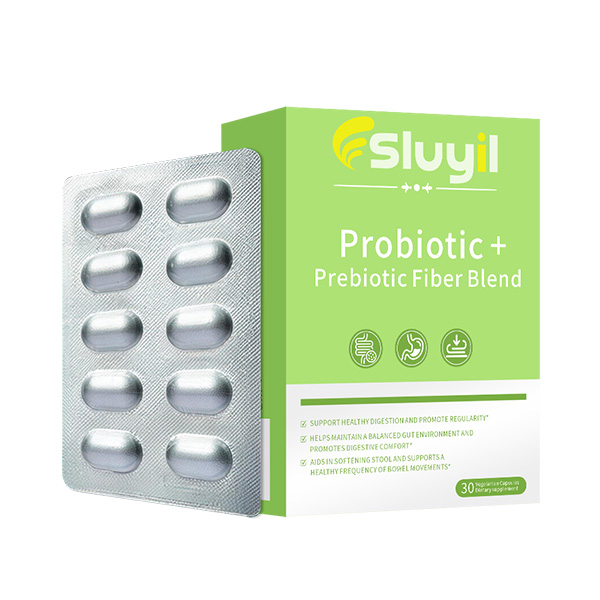
For a brand building a probiotic range, this can serve as the general synbiotic option. Similar five-strain capsules that only change the type or amount of GOS and FOS are better handled as formula options or variants, because the core purchasing decision remains the same.
Oral, women’s, gut-brain and probiotic-mushroom products answer different development briefs. Keeping those briefs separate helps buyers compare meaningful differences in format, evidence and supporting ingredients.
Planning the Custom Order
This formula has no ready-stock designation. MOQ, lead time, sample route and pack options are confirmed after the destination market, strain set, CFU declaration, capsule shell and required shelf life are known.
Send the intended market and storage conditions with the enquiry. HEKONA can then review the strain documentation, prebiotic sources, fill trial, packaging route and label data as one project.
Questions Buyers Usually Ask
Are the five strain codes available
They must be confirmed from the approved formula and supplier documents before publication. The current page does not create or assume strain codes that are absent from the label facts.
Is 20 billion CFU guaranteed through expiry
Not automatically. The declaration point and any expiry guarantee depend on the approved strains, overage, test method, package and stability data.
Can the prebiotic ratio be changed
It can be reviewed as a custom formula. A change affects fill weight, capsule feasibility, label data and the finished-product stability plan.
Discuss a 5-Strain Synbiotic Project
Send the destination market, preferred strain documentation, CFU declaration, capsule count, shelf-life target and expected order quantity. HEKONA will review feasibility, sampling, packaging, MOQ and quotation.